Truck Loader Conveyors: A Buyer's Guide for Faster Dispatch
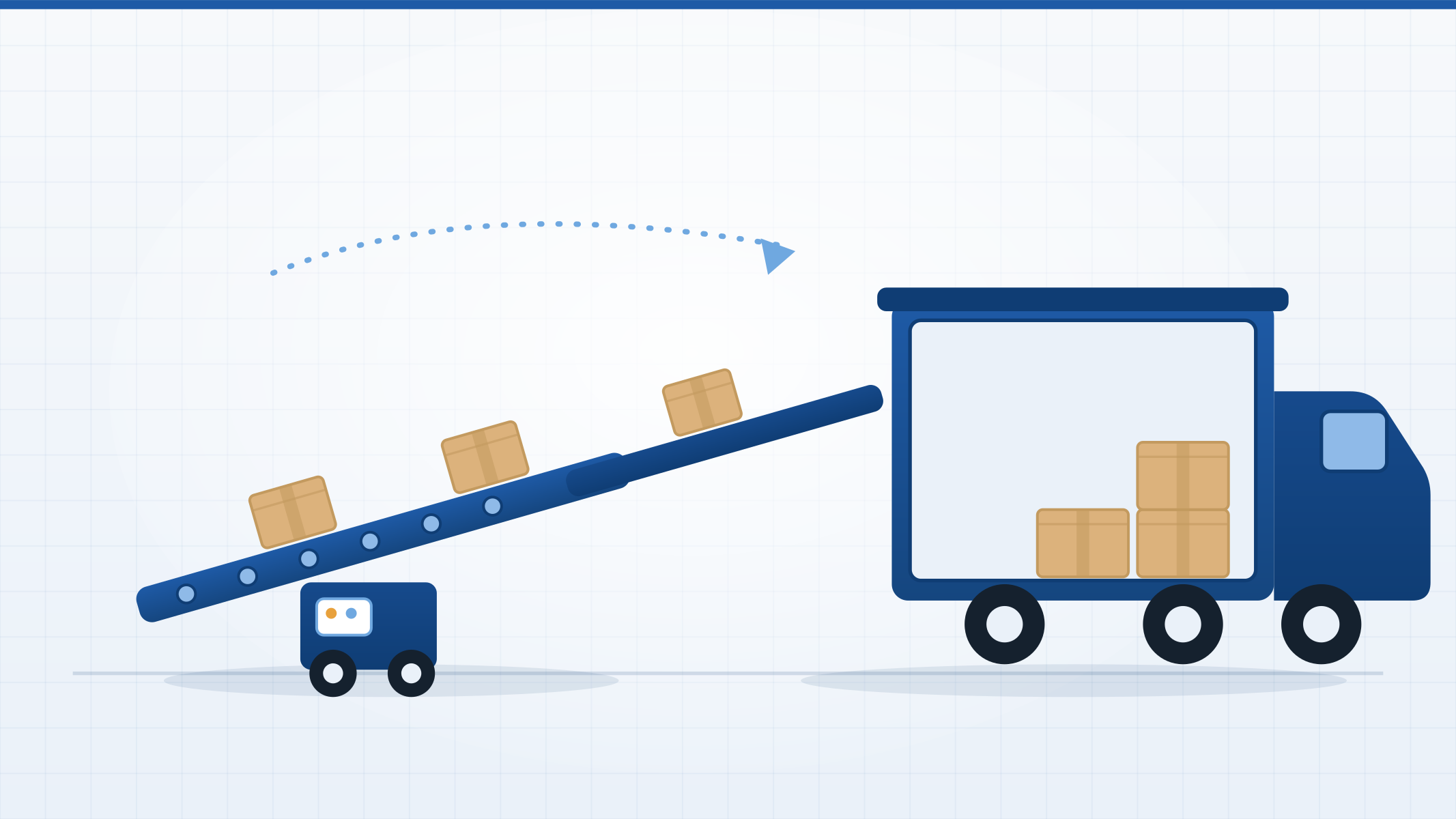
A truck loader conveyor moves cartons and bags directly into the vehicle on a powered belt, so workers stop carrying loads across the dock and up into the trailer. For most Indian dispatch operations it cuts loading time by 40–50%, reduces labour fatigue and product damage, and pays for itself within a few peak seasons.
Key takeaways
- Manual truck loading is usually the slowest step in dispatch — and the most injury-prone.
- A telescopic or mobile loader conveyor can nearly halve loading and unloading time per vehicle.
- Match the conveyor's reach to your longest vehicle or container, not your average one.
- Variable belt speed lets the same unit serve fast bulk loading and careful fragile-goods handling.
- Mobile, wheeled designs serve multiple dock bays with one machine.
What is a truck loader conveyor, and how much time does it save?
It is a heavy-duty belt conveyor — usually inclined and often telescopic — that bridges your dispatch floor and the inside of a truck, trailer or shipping container. Loaders stand in place and feed the belt instead of walking every carton in. One textile exporter we work with cut container loading time roughly in half after switching from manual chains to a conveyor-based dock; the numbers are in this case study.
The same machine works in reverse for unloading inbound vehicles, which is why plants receiving raw material and dispatching finished goods often choose a two-way truck loader and unloader.
Mobile loader or fixed loader-unloader: which do you need?
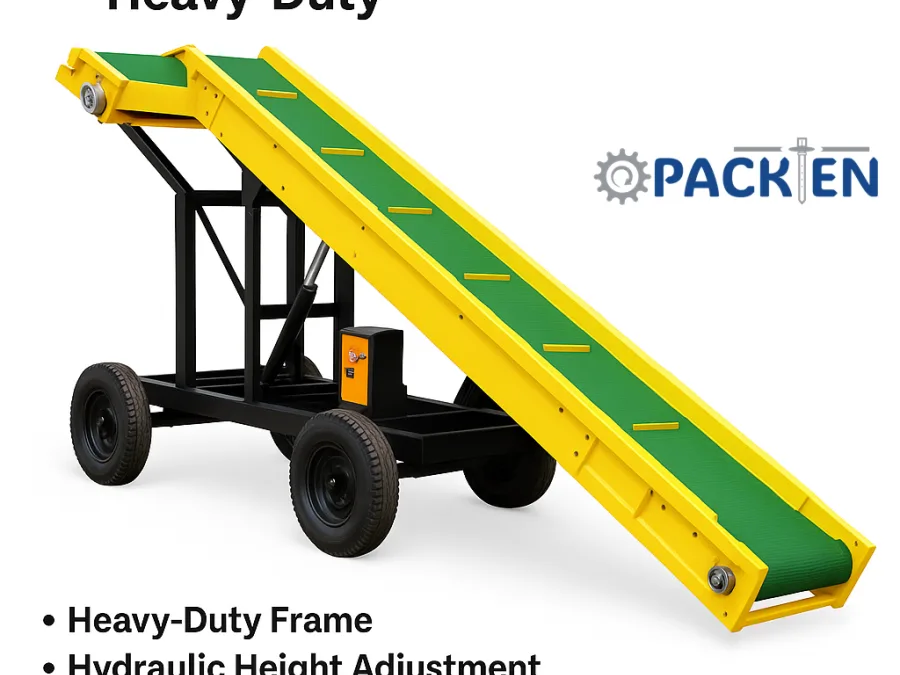
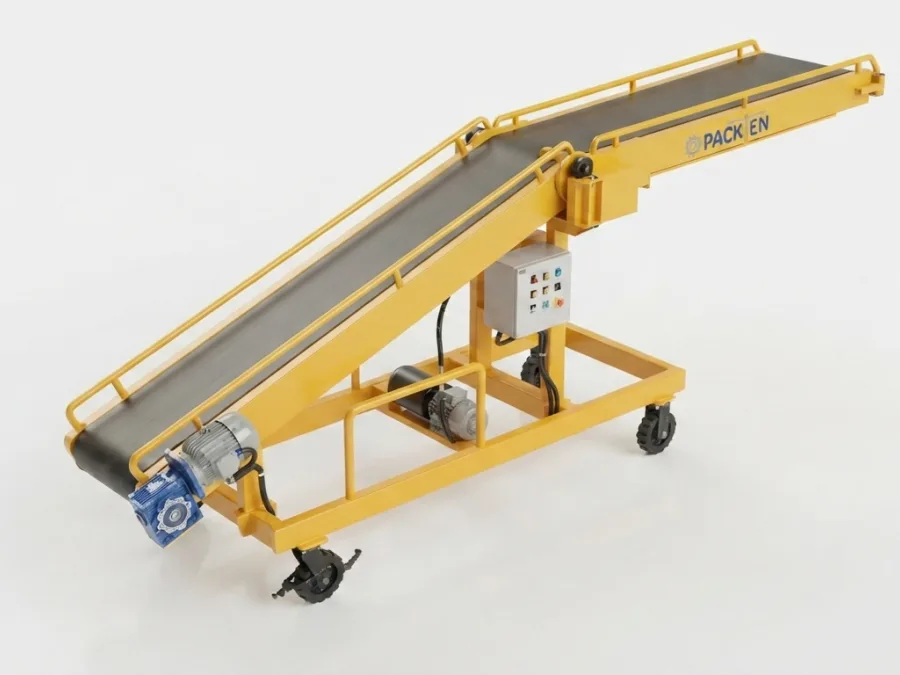
- Mobile truck loader: mounted on wheels, moves between bays, extends into the vehicle as loading progresses. Best when you load from several points or rent warehouse space. See our mobile truck loader conveyor.
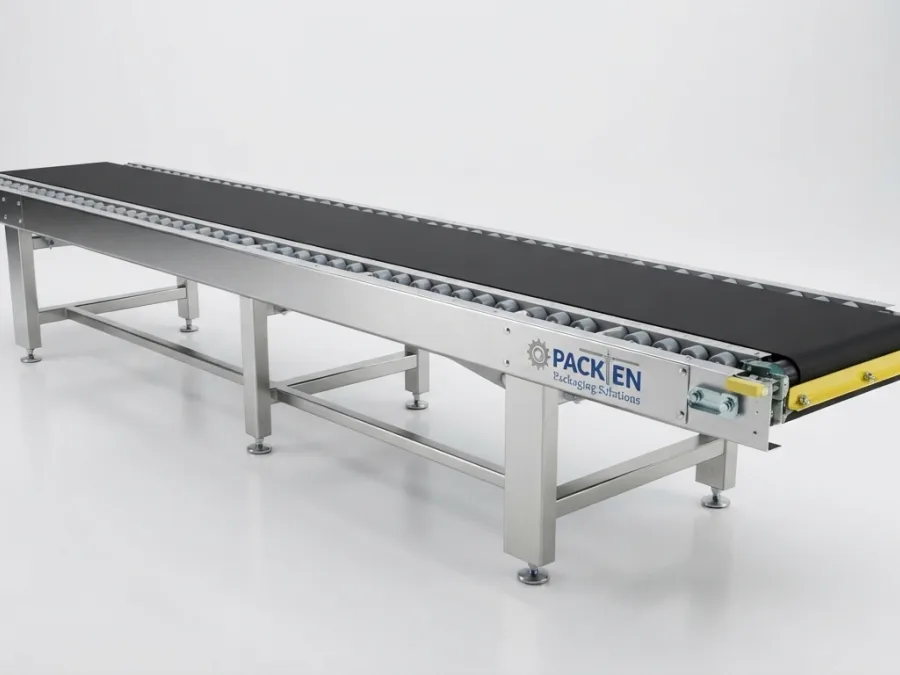
- Fixed loader-unloader: installed at a dedicated dock with two-way belt operation. Best for high-frequency docks in logistics and warehousing operations where the same bay runs all day.
What reach and belt length fit your vehicles?
Measure the inside length of the largest vehicle you load, because the belt must reach deep enough that no one carries cartons more than a step or two. Typical requirements look like this:
| Vehicle | Approx. internal length | What to specify |
|---|---|---|
| Tata Ace / small LCV | 7–9 ft | Short inclined conveyor |
| Standard truck (17–22 ft) | 17–22 ft | Telescopic boom reaching most of the body |
| 32 ft container truck | 32 ft | Long telescopic reach or mobile unit that advances |
| 20/40 ft shipping container | 20–40 ft | Telescopic loader sized for full container depth |
Also confirm dock height versus vehicle bed height — the conveyor's incline range must cover your lowest and highest vehicles.
What belt speed and capacity should you specify?
Belt speed should adapt to the product and the crew: faster for tough cartons with a full team, slower for fragile goods or a lean shift. Ask for variable speed control rather than a single fixed rate. On capacity, specify the weight of your heaviest carton or bag and the peak cartons-per-hour you must load — the frame, belt and drive are sized from those two numbers. Heavy or abrasive goods may also need specific belt materials, which we cover in our conveyor belt types guide.
How does it improve loader safety?
Carrying 20–30 kg cartons up a ramp all day causes back injuries, twisted ankles and attrition — costs that rarely appear in a dispatch budget but always appear in reality. With a loader conveyor, workers lift each carton once, at waist height, at each end of the belt. Loading inside a hot container becomes a stationary job instead of a hundred trips. Plants in Mumbai and other port-linked hubs use this as much for workforce retention as for speed.
Pre-purchase checklist
- Longest vehicle/container you load, and its internal length.
- Dock height range and floor condition (for wheeled units).
- Heaviest single carton or bag, and peak load-out per hour.
- One bay or many? (Decides mobile vs fixed.)
- Loading only, or unloading too? (Decides one-way vs two-way belt.)
- Power availability at the dock.
Send us your vehicle sizes and dispatch volumes via the contact page and Packten's engineers will recommend the right truck loading conveyor for your dock — built to your bay layout, with installation and after-sales service handled in-house.
Frequently asked questions
Plants switching from human-chain loading typically cut loading time per vehicle by 40–50%, because workers stop walking cartons into the truck and simply feed a belt. The saving compounds at busy docks: faster turnarounds mean more vehicles per bay per day without extending shifts.
Yes — that is what telescopic designs are for. The boom extends to reach deep into long vehicles and retracts for short ones, while adjustable incline covers different bed heights. Specify your longest vehicle and your dock height range, and one machine covers the fleet.
Very little relative to its duty: routine belt-tracking checks, lubrication of bearings and the telescopic mechanism per schedule, and periodic inspection of the drive. It is a mechanically simple machine — which is exactly why a well-built unit survives years of peak seasons at a dispatch dock.
Yes, with the right belt specification — bag-friendly belt surfaces and side guides keep sacks tracking straight on the incline. Mention every product type you load (cartons, woven sacks, bales, drums) when you specify the machine so the belt material, width and cleats are chosen for the hardest case.