Conveyor Belt Types for Packaging Lines: How to Pick the Right One
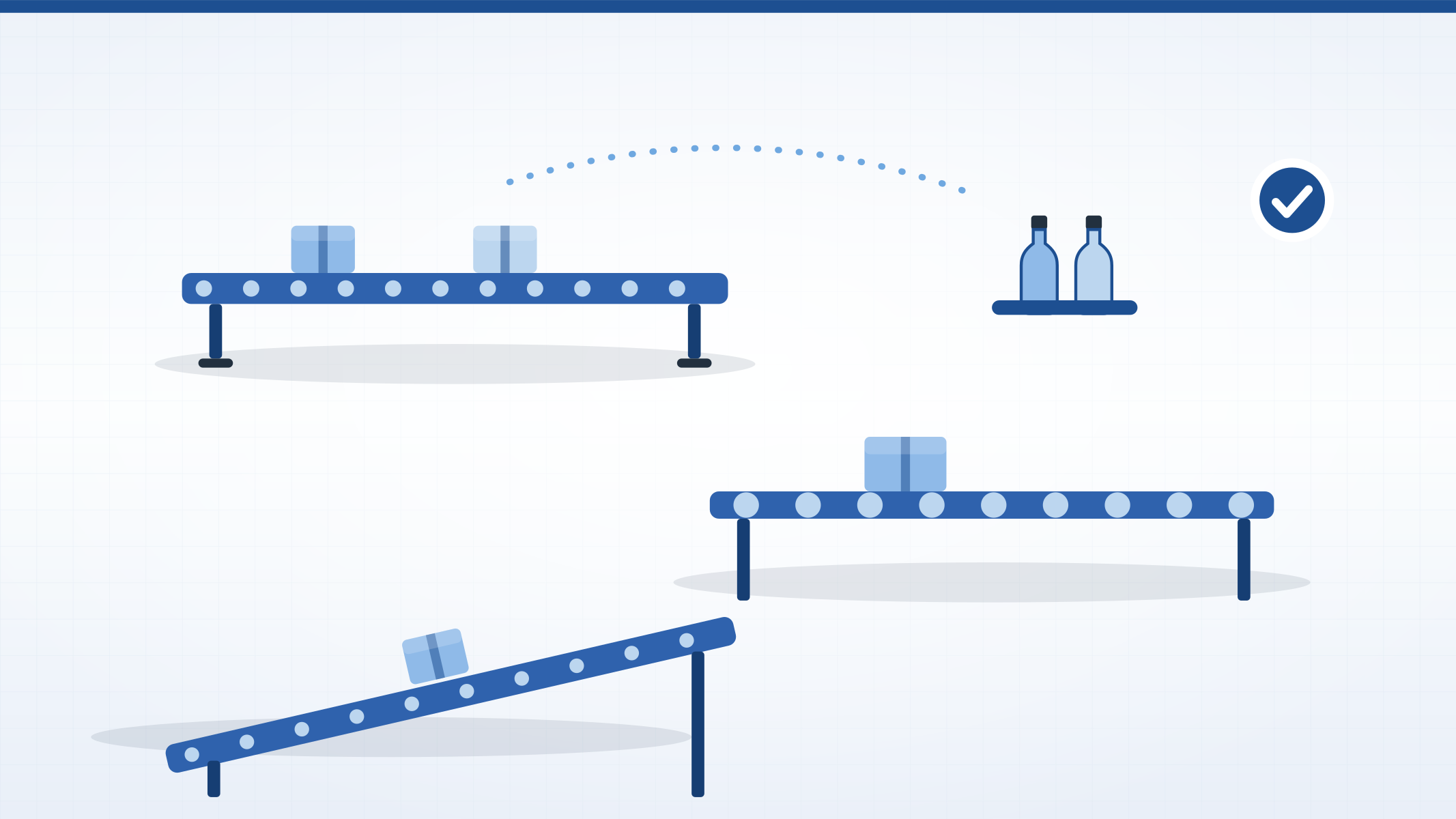
Packaging lines mainly use five conveyor types: PVC/PU flat belts for general product movement, modular plastic belts for washdown and wet areas, roller conveyors for cartons, slat conveyors for heavy or hot loads, and inclined or telescopic belts for elevation and truck loading. The right choice depends on your product's weight, hygiene needs and where in the line the conveyor sits.
Key takeaways
- Match the belt to the product and position in the line — infeed, between machines, and dispatch each have different needs.
- Food and pharma lines need food-grade belts and washdown-friendly frames.
- Width, speed and drive rating come from your pack size and peak throughput — not guesswork.
- Conveyors are what turn standalone machines into a line; most "machine problems" at integration are really conveyor mismatches.
- Cheap belts fail at the joint — belt quality and tracking decide maintenance cost.
Which conveyor types are used in packaging lines?
Almost every line combines a few of these:
| Type | Best for | Load | Washdown |
|---|---|---|---|
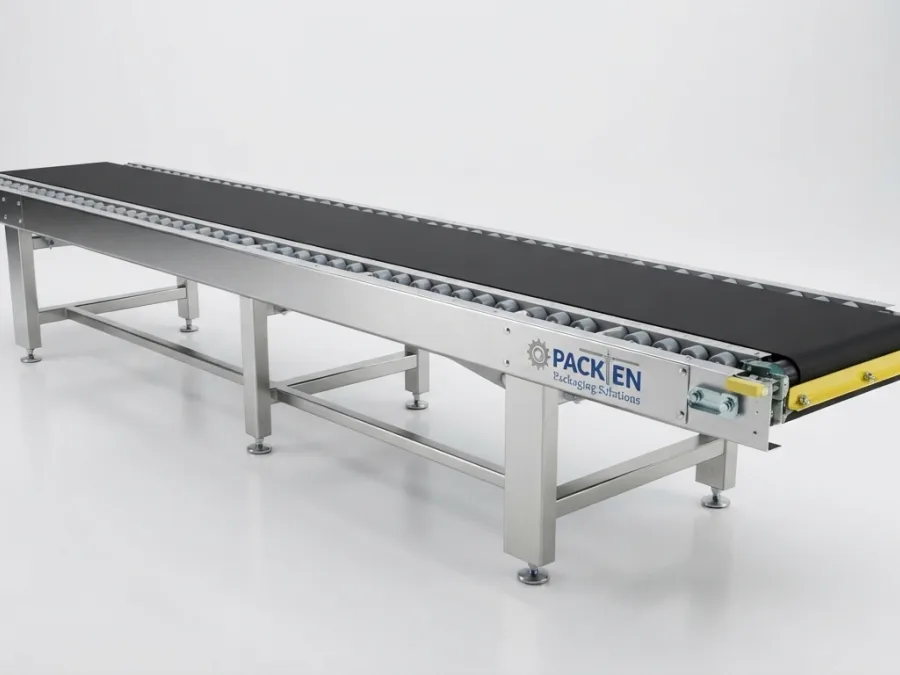
| PVC/PU flat belt | General transport between machines, infeed to sealers | Light–medium | PU: yes (food-grade available) |
| Modular plastic belt | Wet areas, curves, food processing | Medium | Excellent |
| Roller conveyor | Cartons and boxes, accumulation, dispatch sorting | Medium–heavy | Frame-dependent |
| Slat / chain conveyor | Heavy, hot or oily products | Heavy | Good |
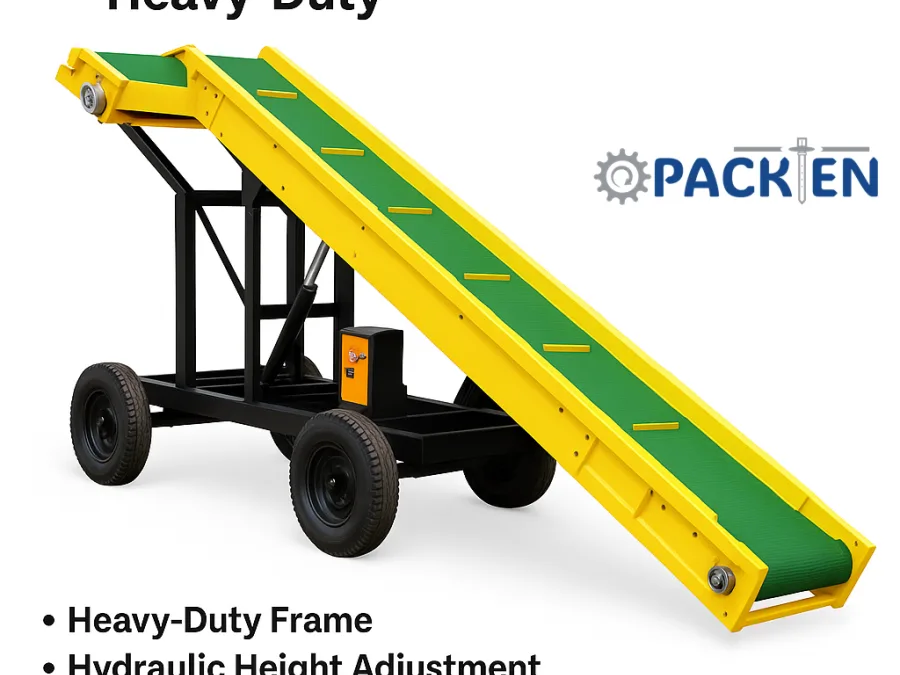
| Inclined / telescopic belt | Level changes, truck and container loading | Medium–heavy | N/A |
For the dispatch end specifically — loading trucks and containers — see our dedicated truck loader conveyor buyer's guide and the mobile truck loader conveyor itself.
How do you size width, speed and drive?
- Width: widest product + 50–100 mm clearance; for cartons on rollers, at least three rollers under the shortest carton at all times.
- Speed: derive from peak throughput — packs per hour ÷ spacing gives belt speed; the conveyor must match the machines it links, with a small buffer margin.
- Drive: motor rating from total moving load at start-up, not average load; specify VFD control where the line speed must tune to a sealer or tunnel.
- Frame height: match the working height of adjacent machines — mismatched transfer heights are the most common integration snag.
- Length and layout: straight runs are cheapest; use bends and inclines only where the floor forces them.
What matters for food and pharma lines?
Contact surfaces must be food-grade (PU belts, SS or coated frames), joints must be cleanable, and the design must tolerate daily washdown without rusting or trapping product. This is standard practice for our food processing customers and mandatory in pharma. If an auditor will ever walk your line, specify hygiene requirements in the conveyor quote — retrofitting food-grade belts onto a rusting frame never really works. Our food-grade machinery compliance guide covers the wider requirements.
How do conveyors tie machines into one line?
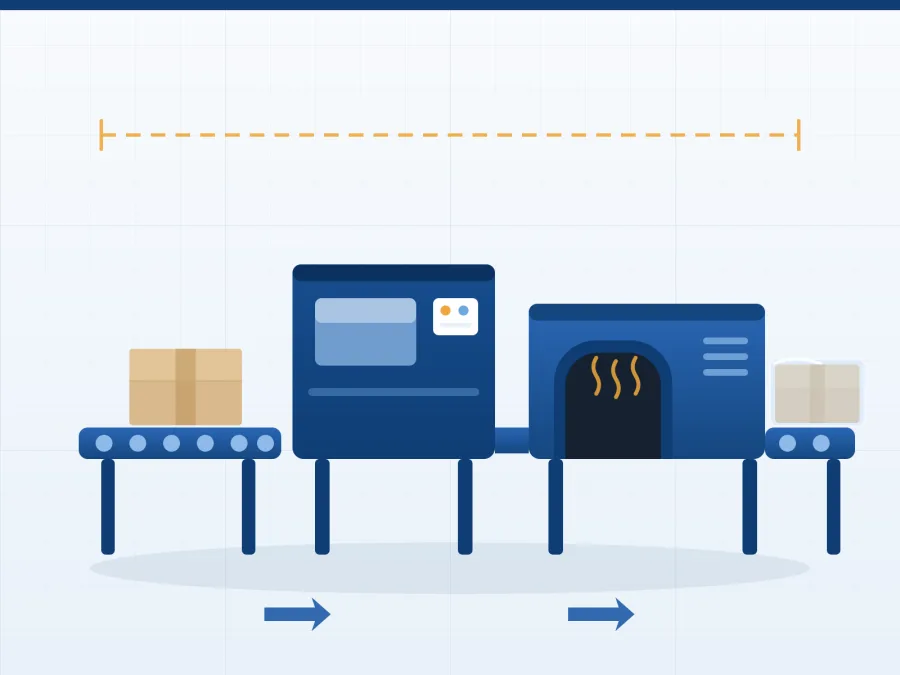
A sealer, a shrink tunnel and a strapping machine only become a line when conveyors carry product between them at matched heights and speeds — with short accumulation zones to absorb micro-stoppages. That is why Packten designs conveyor belts together with the machines they connect, and why our custom machine design team starts every line project from the conveyor layout. Warehouses and 3PLs use the same building blocks for sortation and dispatch — see our logistics industry page.
Which conveyor mistakes cause downtime?
- Under-specified belts that stretch and slip at real loads.
- No tracking adjustment, so belts walk off their rollers within weeks.
- Fixed speed everywhere, leaving no way to balance the line.
- Ignored transfer points — products tip or jam between conveyors of different heights.
- No maintenance access — a belt change that should take an hour takes a day.
Spec checklist before you request a quote
- Product: dimensions, weight, surface (dry/wet/oily/hot).
- Throughput at peak, and the machines the conveyor connects.
- Line layout sketch with available floor space and heights.
- Environment: dust, washdown, temperature.
- Hygiene requirement: general, food-grade or pharma.
Planning conveyors for a new line — or fixing the weak link in an existing one? Send your layout and product details via the contact page; Packten builds conveyors matched to your machines, in Surat, with installation across India (plants around Pune and other industrial hubs included).
Frequently asked questions
Food-grade PU flat belts and modular plastic belts are the standard choices: both are certified for food contact, tolerate daily washdown and resist oils. Pair them with stainless or coated frames designed without dust-trapping corners, and keep the belt supplier's food-grade certificate on file for audits.
Take your widest product and add 50–100 mm of clearance; for cartons on roller conveyors, ensure at least three rollers support the shortest carton at all times. Width is cheap at design time and expensive to change later, so size for the largest product you realistically expect to run.
Under-specified belts stretching at real loads, missing tracking adjustment so the belt walks off its rollers, overloaded start-ups the drive was never rated for, and joints done cheaply. Almost all early failures trace to specification or installation — which is why belt and frame should come engineered as one unit.
Yes — conveyors are the standard way to integrate mixed-make lines. The critical details are matching transfer heights, coordinating speeds (ideally with VFD control), and short accumulation zones to absorb micro-stoppages. A conveyor builder who visits your line and measures beats one quoting from a catalogue.