Bag & Truck Loading Conveyor Suppliers in India: A Buyer's Guide
If your dispatch still runs on workers carrying bags the length of a truck body, a loading conveyor is usually the fastest payback machine in the plant. But "bag truck loader supplier" covers everything from fabrication shops welding a fixed incline to manufacturers building telescopic, bi-directional systems. This guide explains the machine types, what a good supplier actually provides, and the questions that separate them.
The three machine types suppliers offer
1. Fixed telescopic truck loader-unloaders
Installed at one bay, with a boom that extends up to around 15 m into the vehicle and a belt that runs both ways — load outgoing dispatch, unload incoming raw material. Right for bays that work all day. See our truck loader & unloader systems.
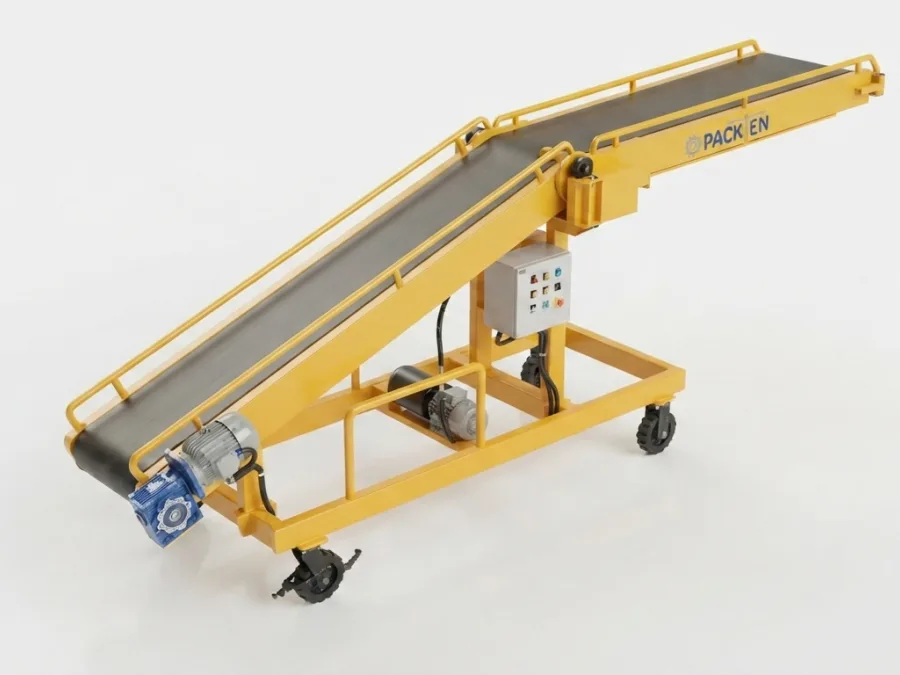
2. Mobile / portable truck loading conveyors
The same telescopic principle on lockable castors: wheel the machine to whichever bay is working, extend 12–18 m, load, retract, move on. No civil work — the machine only needs a 3-phase point at each bay. Right for multiple sheds, rented godowns and seasonal peaks. See our mobile truck loader conveyor.
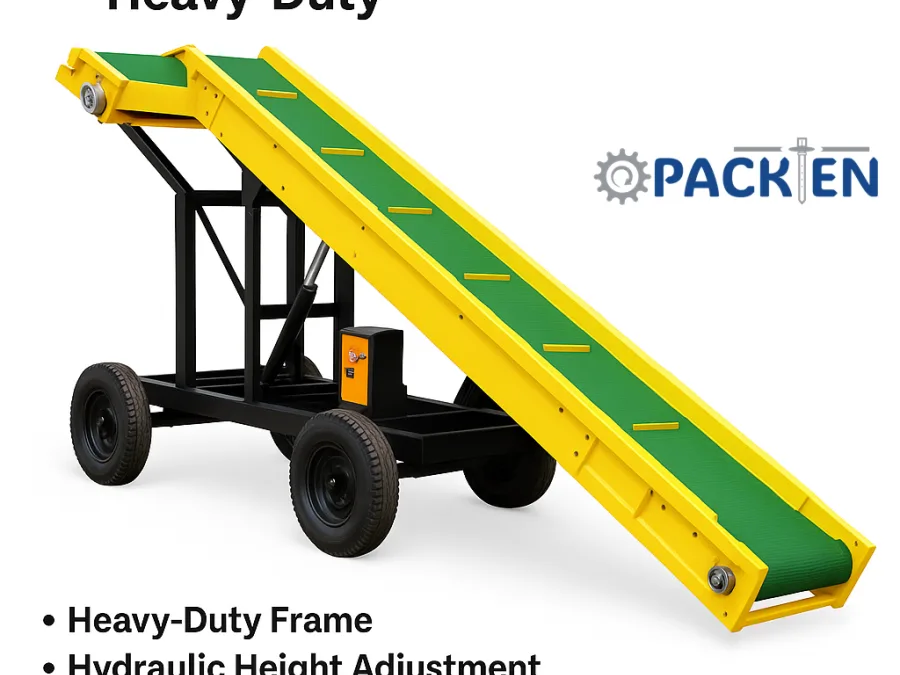
3. Simple fixed-incline loading conveyors
A straight belt at a fixed angle — cheapest, but workers still walk the truck bed to place loads. Fine for low volumes; a false economy once vehicles queue.
What handling do you need?
- Bagged goods — cement, fertiliser, grain, sugar, flour, resin: check kg-per-metre belt rating (Packten units carry up to 50 kg per running metre) and bag-friendly belt surface
- Cartons and cases — FMCG and e-commerce shippers: check belt width against your largest carton
- Mixed dispatch — variable belt speed (0–25 m/min) lets the line match the crew, not the other way round
What a good supplier provides (and a trader usually can't)
- Engineering to your bay — reach sized to your longest vehicle, height to your dock, belt to your loads
- Installation and commissioning — the machine tested against your actual vehicles, not just delivered to the gate
- Operator training — extension, speed and safety interlocks used correctly from day one
- Warranty and spares — a stated warranty (ours is 12 months) with spares stocked at the factory, and a named service contact
Eight questions to ask any truck loading equipment supplier
- Do you manufacture the machine yourselves, and can we visit the works?
- What reach, belt width and capacity do you recommend for our vehicle mix — and why?
- Can the belt run bi-directionally for unloading?
- What does installation include, and who does it?
- What is the delivery time? (Typical Indian manufacture: 5–8 weeks)
- What is under warranty, and where do spares come from?
- Can you show the machine loading bags like ours — on video or at a customer site?
- What civil or electrical work must we prepare?
What drives the price?
Reach (a 15 m boom costs more than 8 m), belt width and capacity rating, duty cycle (single shift vs continuous), mobility (castor-mounted mobile units carry structure the fixed unit doesn't) and controls. Compare quotes only after normalising these — and put the labour saving on the other side of the sheet: crews stop walking the truck length with every load, so bays turn vehicles around faster with fewer people. Our truck loader conveyor buyer's guide shows how to run the dispatch-time numbers.
Where Packten fits
Packten manufactures both fixed truck loader-unloader systems and portable truck loading conveyors at our Surat, Gujarat factory, and installs them at plants, warehouses and 3PL yards across India — with factory trials before dispatch, operator training at handover and a 12-month warranty with spares from our own works. If dispatch is the tail end of a packing problem, we also build the turnkey packaging line in front of it. Send your bay layout and vehicle mix for a configured recommendation and quote.
Frequently asked questions
A fixed telescopic loader is installed at one bay and suits continuous, all-day loading. A portable (mobile) loading conveyor sits on lockable castors, needs no civil work and can serve several bays or sheds — one operator repositions it in minutes.
Prefer an actual manufacturer over a trader: they can size reach, belt width and capacity to your vehicles, install and commission on-site, train operators, and back the machine with warranty and factory spares. Ask to see the machine loading bags like yours before you order.
Price follows reach, belt width, capacity rating, duty cycle and whether the unit is mobile. Rather than a rate card, get quotes configured to your bay and vehicle mix — and weigh them against the bay time and manpower the machine saves every day.