How to Cut Packing Time per Order in E-commerce Warehouses
To cut packing time per order in an e-commerce warehouse, attack the four places the seconds actually go: standardise pack formats, automate the sealing step, move products on conveyors instead of in people's hands, and mechanise truck loading at dispatch. Warehouses that do all four routinely cut per-order handling time by half or more — without adding headcount in peak season.
Key takeaways
- Most packing time is not packing — it is walking, waiting and re-handling.
- Sealing is the easiest step to automate and usually the first bottleneck to break.
- Fewer, standardised pack formats speed up every downstream step.
- Conveyors turn a packing hall from a walking track into a flow line.
- Dispatch loading is the hidden queue: a loaded belt beats a human chain into every truck.
Where does packing time actually go?
Time an order across the floor and the pattern repeats in almost every fulfilment operation: picking hands the item to packing, packing hunts for the right box or bag, sealing happens one pack at a time by hand, sealed parcels pile up and get carried to dispatch, and at the dock a chain of workers walks each carton into the vehicle. The machine time is seconds; the movement and waiting are minutes. That is why automation aimed only at the "packing" moment disappoints — the wins are in the flow.
Step 1: Standardise pack formats
Reduce your box and bag sizes to the smallest set that covers your catalogue — many D2C brands get to 4–6 formats. Standardisation speeds box selection, lets sealing machines run without constant adjustment, makes cartons stack predictably, and cuts film and void-fill waste. It is free, and it multiplies the value of every machine that follows.
Step 2: Automate the sealing step
Hand-taping and hand-wrapping cap your line at human pace and vary with fatigue. Two machine options cover most operations:
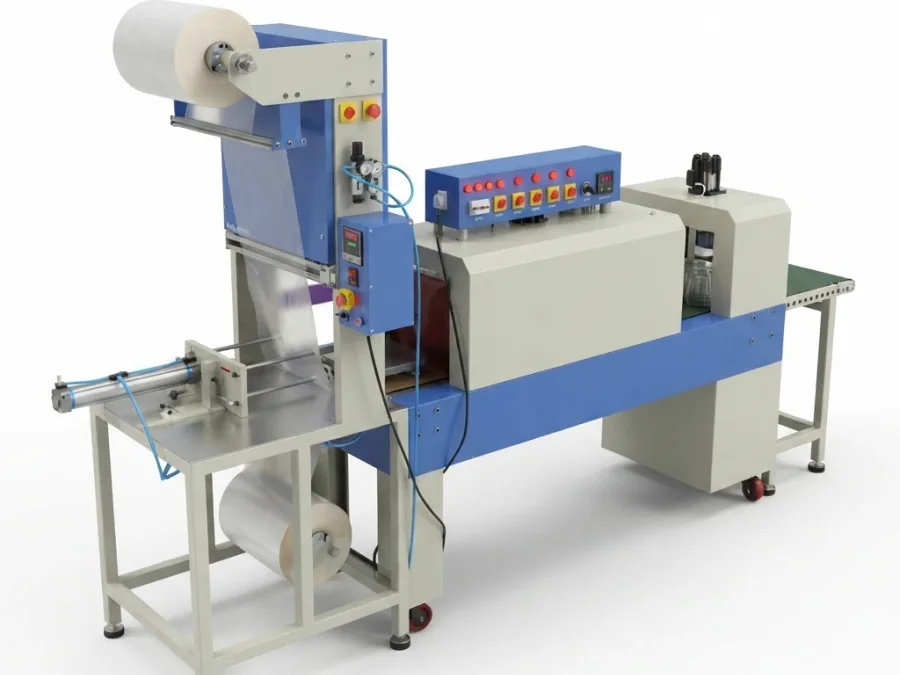
- Moderate volumes / varied sizes: an L-sealing machine with a shrink tunnel gives tight, tamper-evident, professional packs at a modest investment.
- High volumes / consistent formats: an automatic web sealing machine seals continuously with no per-pack operator action — built exactly for marketplace-scale order flows.
Shrink-wrapped parcels also survive courier handling better, which shows up directly in your damage and return rates. For the semi-vs-fully-automatic decision, see this comparison.
Step 3: Move products, not people, with conveyors
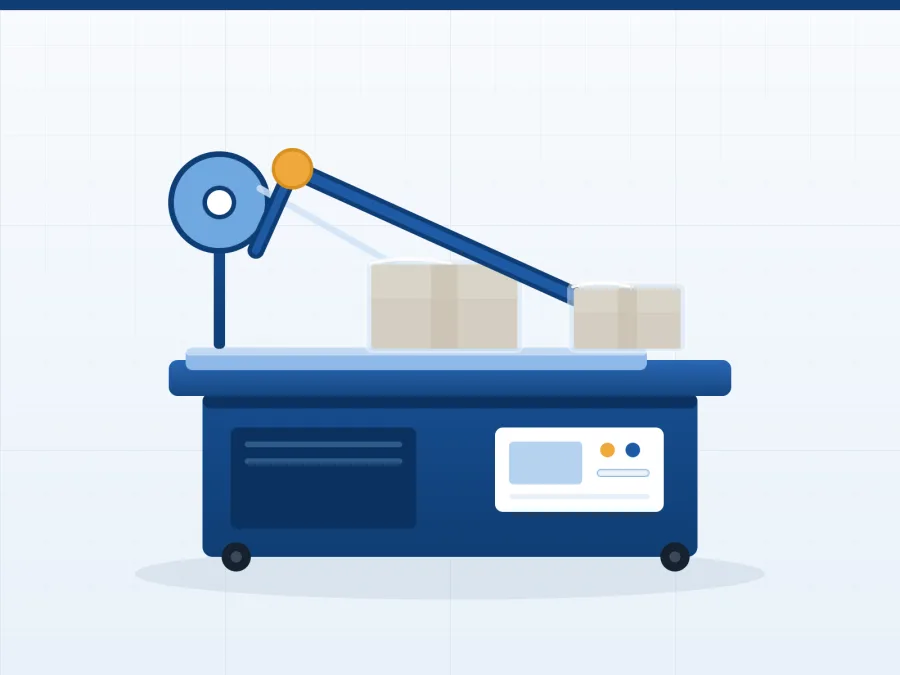
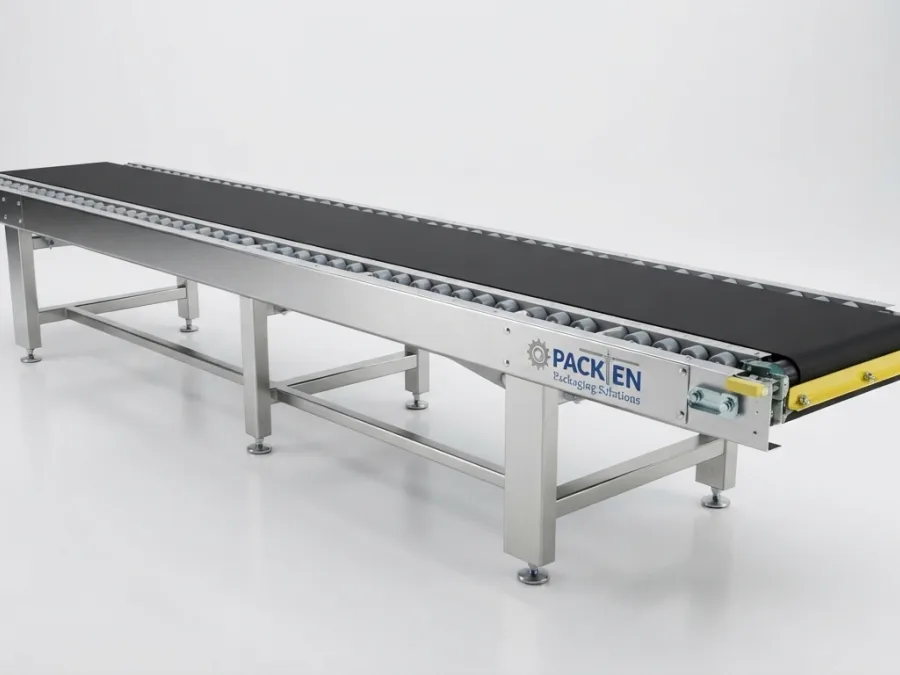
Link packing stations to sealing, and sealing to dispatch, with conveyor belts — flat belts between stations, inclined belts between levels, simple gravity rollers where powered belts are overkill. Packers stay at their stations and the parcel travels; accumulation zones before machines absorb the natural burstiness of order flow so no one stands waiting. This is the same building block our logistics and warehousing customers use for sortation.
Step 4: Speed up dispatch with truck loading conveyors
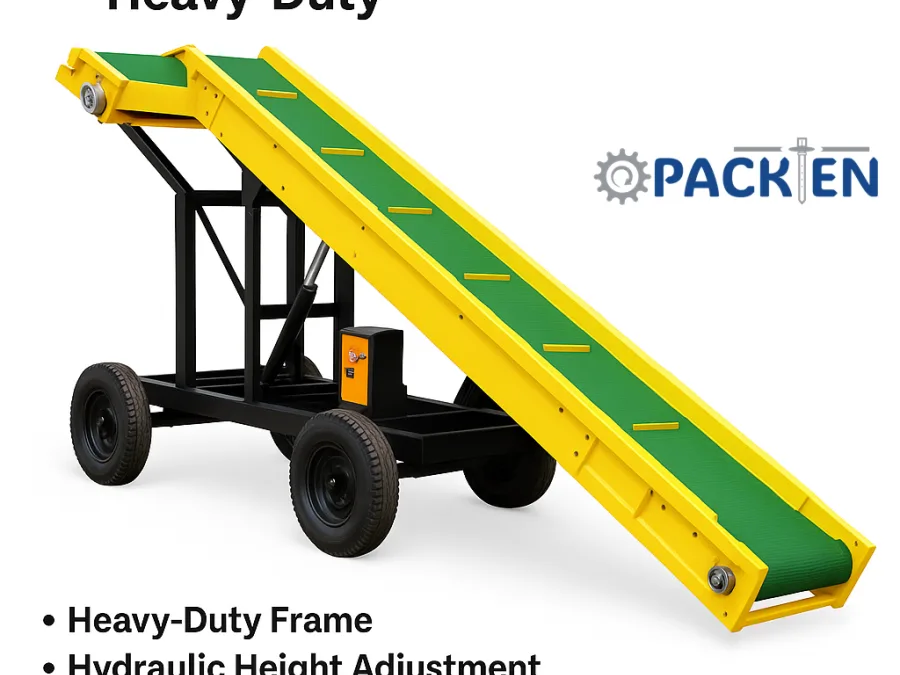
At the dock, a mobile truck loader conveyor extends into the vehicle so parcels flow in on a belt instead of through a human chain. Loading time per vehicle drops sharply — a textile exporter we work with halved container loading time with exactly this change — and evening dispatch cutoffs stop being a daily sprint.
What results should you expect?
| Step | Manual baseline | After automation |
|---|---|---|
| Seal one parcel | Hand-taping, operator-paced, variable finish | Machine-sealed in seconds, uniform every time |
| Station-to-dispatch transfer | Carried by hand, batch by batch | Continuous conveyor flow, zero walking |
| Load a truck | Human chain, 3–5 workers | Belt-fed, 2 workers, roughly half the time |
| Peak-season scaling | Hire and train temporary packers | Run the machines longer |
Where should a growing D2C brand start?
In order of payback for most operations: standardise formats (free, this week), automate sealing (biggest visible win), add conveyors as volume grows, then mechanise the dock. You do not need a full line on day one — Packten designs staged setups for e-commerce and D2C operations and builds each stage to accept the next, from single machines to complete flows for fulfilment hubs in Bengaluru and across India.
Want your per-order packing time measured against what a machine line would do? Share your order volumes and pack formats on the contact page — Packten's engineers will map the bottlenecks and quote the stages worth automating first.
Frequently asked questions
Standardise your pack formats first — it costs nothing and speeds every downstream step. The first machine to add is usually a sealing machine, because hand-taping is the slowest repeated action on the floor and the one where quality varies most between packers and shifts.
As a rule of thumb, once a person spends most of a shift sealing packs — a few hundred orders a day — a semi-automatic L-sealer already pays for itself in speed, film savings and pack quality. Marketplace-scale operations running thousands of orders daily justify a continuous automatic web sealer.
Yes. A shrink-wrapped pack is sealed on all sides, holds its contents immobile, resists moisture and shows tampering immediately — all of which cut transit damage and disputes compared with loosely taped cartons. Several marketplaces also grade sellers on packaging quality, so the benefit shows twice.
Often yes, because machines absorb peaks that temporary labour cannot: you run the same equipment longer instead of hiring and training a seasonal batch of packers. Size the machine for your peak week, and it simply runs fewer hours the rest of the year — capacity that hires, trains and never resigns.