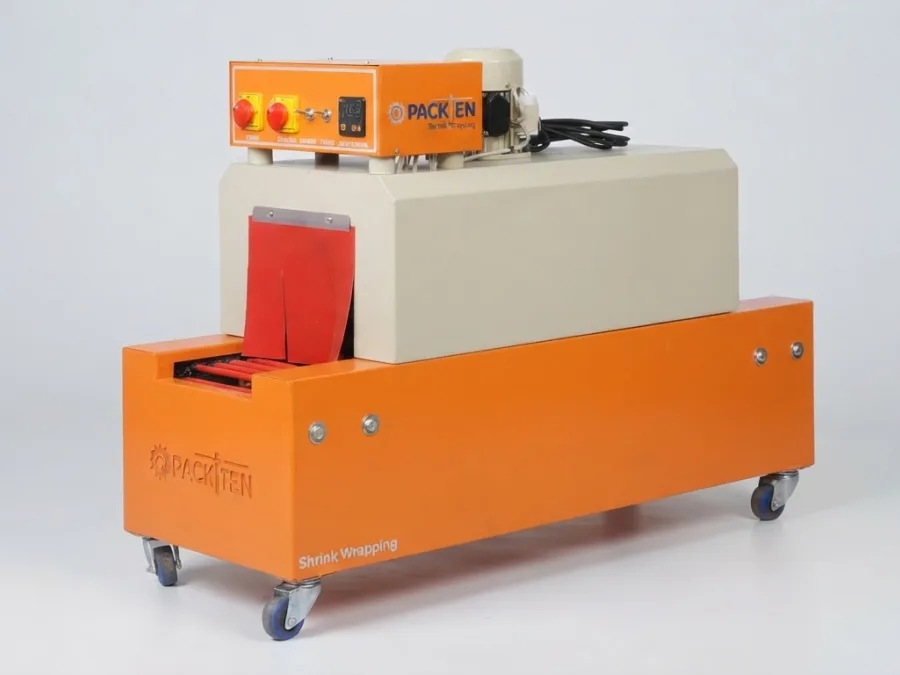
Shrink Wrapping Machine Price in India: 9 Factors That Decide Your Quote
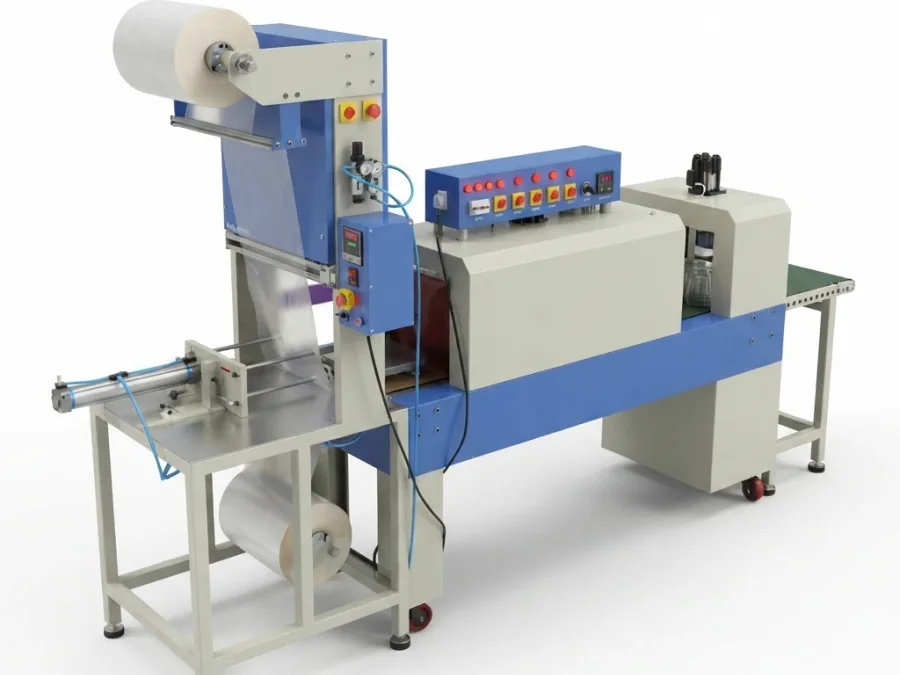
The price of a shrink wrapping machine in India depends far more on specification than on brand: chamber size, automation level, build material, heating system and component quality together decide most of the quote. Entry-level manual setups, semi-automatic L-sealer-plus-tunnel combinations and fully automatic lines sit in different budget bands — and knowing the nine factors below lets you compare quotes intelligently instead of just picking the lowest number.
Key takeaways
- No honest manufacturer quotes a fixed price without knowing your pack size, output and film — those drive the machine's size and cost.
- Automation level is the single biggest price factor: manual → semi-automatic → fully automatic each step up in both cost and capacity.
- Stainless steel construction, branded electricals and PLC control cost more upfront and less over the machine's life.
- An Indian manufacturer typically beats imports on landed cost, spares availability and service response.
- Running cost (film, power, manpower) usually exceeds the machine price within a couple of years — compare both.
How much does a shrink wrapping machine cost in India?
Machines are quoted to specification, so ranges are wide: a compact L-sealer with a small shrink tunnel for a startup costs a fraction of a fully automatic web-sealing line for an FMCG plant. Rather than publishing misleading "starting from" numbers, this guide explains what moves the quote — then you can request an exact price for your requirement in minutes via our contact page.
Which nine factors decide your quote?
1. Automation level
Manual and semi-automatic machines need an operator per pack; fully automatic lines feed, seal and shrink continuously. Each automation step roughly multiplies capacity — and price. Our guide to semi-automatic vs fully automatic packaging machines helps you pick the right band before you ask for quotes.
2. Chamber and pack size
Bigger packs need wider sealing beds and larger tunnel chambers — more steel, more heaters, more conveyor. Quoting your real largest pack (not a guess) keeps you from paying for capacity you never use.
3. Required output per hour
Higher speeds demand heavier-duty drives, better temperature recovery and often a longer tunnel. State your normal and peak packs-per-hour separately.
4. Build material
Mild steel with powder coating suits dry industrial products; stainless steel contact parts or full SS builds — standard for food and pharma — cost more and last dramatically longer in wet or corrosive environments.
5. Heating and insulation quality
Efficient heaters and a well-insulated chamber raise the purchase price slightly and cut the electricity bill every single shift. Ask every vendor for the connected load and expected running load.
6. Component brands
PLC, sensors, contactors, drives and belts from reputed makes cost more than unbranded equivalents — and are the difference between a five-minute part swap and a week hunting for a match.
7. Film type you will run
PE bundling film needs a hotter, heavier tunnel than POF retail film. The film decision (see our shrink film guide) is baked into the machine price.
8. Customisation
Non-standard infeeds, product-specific conveyors, integration with existing machines — custom engineering adds cost but is usually cheaper than forcing your product through a standard machine that half-fits.
9. Installation, training and support scope
A bare-machine price and a commissioned-line price are different quotes. Check what includes transport, installation, operator training and warranty terms before comparing numbers.
Indian-made vs imported: what do you really save?
| Factor | Indian manufacturer | Import |
|---|---|---|
| Landed cost | No import duty, freight or agent margin | Duty + freight + margin on top of price |
| GST | Input credit claimable on the invoice | IGST on import, more paperwork |
| Spares | Days, from the factory | Weeks, via the importer |
| Service visit | Engineer on site quickly | Depends on local agent capability |
| Customisation | Built to your pack at the factory | Limited to catalogue options |
This is why buying from a manufacturer that builds machines in its own works — like Packten's in-house manufacturing in Surat — usually wins on total cost even when a trader's headline price looks close. We deliver and service machines across India; see our city-wise supply pages.
What running costs come after the machine?
- Film: the largest recurring cost — thinner high-quality film often beats cheap thick film per pack.
- Power: driven by heater efficiency and insulation; ask for the running load, not just connected load.
- Manpower: automation level decides operators per shift — often the real payback driver.
- Maintenance and spares: small if scheduled, large if ignored.
To see how these combine into a payback period, use our packaging automation ROI guide.
How do you get an accurate quote fast?
- Your product and its pack dimensions (L × W × H) — largest and smallest.
- Target output per hour, normal and peak.
- Film type if already decided (POF/PE/PVC).
- Available floor space and power.
- Whether you need only the machine or a commissioned line with training.
Send those five points through our contact page and Packten will return an itemised quote for the right shrink tunnel machine or complete shrink wrapping line — typically within one working day. You can also compare our machines first to shortlist the configuration that fits your plant, whether you run an FMCG unit or any other high-volume packaging operation.
Frequently asked questions
The range is wide because machines are built to specification: a compact L-sealer with a small tunnel for a startup sits at the entry level, while fully automatic web-sealing lines for FMCG plants cost several times more. Share your pack size, output and film with a manufacturer to get an exact quote rather than relying on generic price lists.
For mainstream shrink wrapping duties, well-built Indian machines match imports in performance while beating them on landed cost, spares availability and service response. Imports can make sense for exotic ultra-high-speed applications, but for most Indian plants a domestic manufacturer offers better lifetime value and far faster support.
Yes. Packaging machinery purchased for business use carries GST that registered businesses can claim as input tax credit, which effectively reduces your net investment by the tax amount. Always calculate your budget and payback on the net-of-credit figure, and confirm the current rate and treatment with your CA.
Automation level is the biggest single factor — manual, semi-automatic and fully automatic machines sit in different bands. After that, chamber and pack size, required speed, stainless versus mild steel construction, and the brands of PLC and electrical components move the number most.
Not always — but compare scope, not just price. A lower quote often excludes installation and training, uses unbranded components, or under-sizes heating for your film. Over five years, the machine with better components and real service support almost always costs less per pack than the cheapest quote.