Food-Grade Packaging Machines: A Compliance Guide for Indian Food Plants
A packaging machine is food-grade when every surface that touches your product is made of non-toxic, non-reactive, cleanable material — typically stainless steel and food-grade belts — and the machine's design lets you clean it fully without trapping product. For Indian food plants, that standard is not optional: FSSAI licensing, buyer audits and export requirements all assume it.
Key takeaways
- Contact surfaces decide compliance: SS304 (or SS316 for aggressive products) and food-grade belts on everything the product touches.
- India's FSS (Packaging) Regulations require food-safe packaging materials — your film matters as much as your machine.
- Hygienic design (cleanable, crevice-free, washdown-tolerant) is what auditors actually inspect.
- Shrink wrapping is food-safe when film and temperature control are right for the product.
- Specify "food-grade" in writing at quote stage — retrofitting hygiene later is expensive and rarely complete.
What makes a packaging machine food-grade?
Four things together: contact materials (stainless steel, food-grade polymer belts, food-safe lubricants), hygienic design (smooth welds, no dead corners where product accumulates, drainable surfaces), cleanability (tool-free access to product zones, washdown tolerance), and documentation (material certificates your auditor can file). A machine missing any one of the four will eventually fail an audit — usually the design one, because it is invisible in photos.
Which Indian rules touch your packaging line?
In plain language, three layers apply to most food processors:
- FSSAI licence conditions require hygienic processing and packing environments — equipment condition is part of every inspection.
- Food Safety and Standards (Packaging) Regulations, 2018 govern the packaging materials themselves: films and containers in contact with food must meet the prescribed Indian Standards for that material.
- Buyer and export audits (retail chains, QSR brands, importing countries) typically demand more than the legal minimum — stainless contact parts and documented cleaning are their baseline.
Your machine supplier does not replace your compliance team, but the right machine makes their job easy instead of impossible.
Why do SS304 and SS316 contact parts matter?
Stainless steel does not rust, react with food acids or shed coating flakes into product — mild steel does all three, even under paint. SS304 is the standard for dry and general food contact; SS316 adds resistance for salty, acidic or chemically aggressive environments (pickles, sauces, some pharma applications). On a budget, insist on SS for contact zones at minimum: frames can be powder-coated MS where the product never touches.
Which films are food-safe on a shrink line?
POF is the usual answer: chlorine-free, odourless and available in direct-food-contact grades — the default for bakery boxes, sweets, ready-to-eat multipacks. Food-contact PE grades cover heavy bundles like bottled water. PVC is not recommended for direct food contact. The full comparison is in our shrink film guide — and remember to keep your film supplier's food-grade certificate on file for audits.
How do you design for washdown and hygiene?
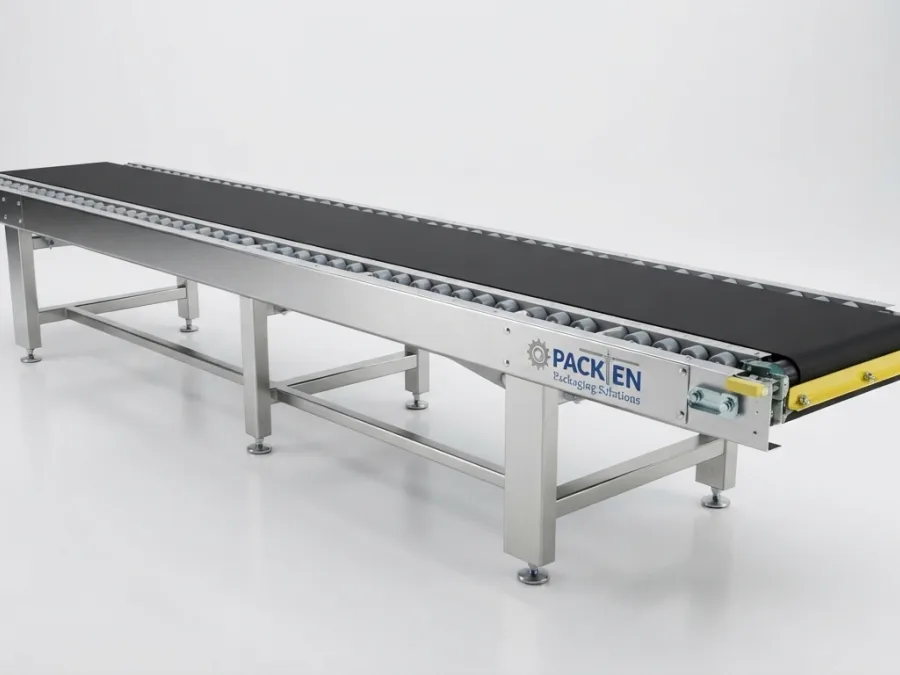
- Choose conveyors with food-grade PU or modular plastic belts and frames that tolerate daily cleaning.
- Ask for rounded frame sections and continuous welds instead of dust-trapping box sections and bolt clusters in product zones.
- Keep electricals sealed and routed away from wash areas (proper IP-rated enclosures).
- Demand tool-free removal of guards and belts in the product zone — cleaning that needs a spanner happens less often than it should.
Is shrink wrapping food-safe?
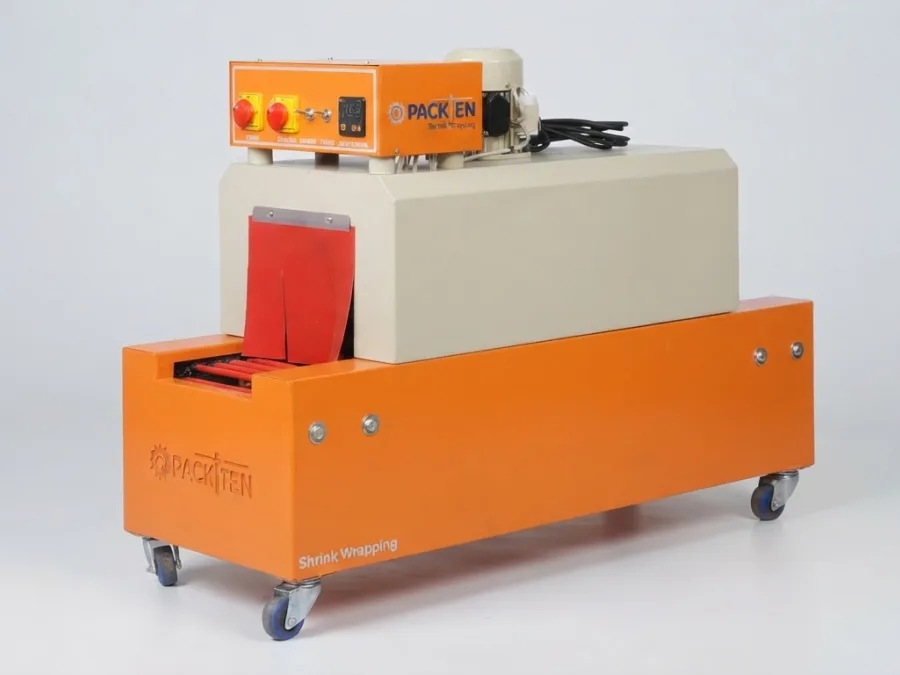
Yes — with the right film and controlled heat. The product is exposed to elevated temperature only for seconds, and correctly sized shrink tunnels hold temperature accurately enough that even chocolates and heat-sensitive items are routinely shrink-wrapped. The risks are cheap film of unknown grade and tunnels with crude temperature control — both avoidable at specification time. Sealing is equally standard: food SMEs run our L-sealers for years in daily production, as in this case study.
Compliance checklist before you buy
- State "food-grade contact parts" explicitly in your enquiry and confirm SS grade (304/316) in the quote.
- Ask which belt materials touch product, and for their food-grade certificates.
- Review the design for cleanability: dead corners, drainage, tool-free access.
- Confirm food-safe lubricants in product zones.
- Match your film to a food-contact grade with certificates on file.
- Keep all material documentation with your FSSAI records for inspections.
Packten builds machines for food processing plants with food-grade contact parts specified from the design stage — including fully custom hygienic layouts through our custom machine design service. Tell us your product and audit requirements on the contact page and we will specify a line your auditor will wave through.
Frequently asked questions
Contact parts — every surface the food or its primary pack touches — should be stainless steel or another certified food-contact material; that is what FSSAI inspections and buyer audits look for. Non-contact frames can be powder-coated mild steel on a budget, though full SS builds last longer in washdown areas.
SS304 is the standard food-grade stainless steel and covers most dry and general food applications. SS316 adds molybdenum for better resistance to salt, acids and aggressive cleaning chemicals — worth specifying for pickles, sauces, marine products and pharma-adjacent lines. For most food plants SS304 contact parts are sufficient.
Yes, when done with certified food-contact film and controlled heat. The product sees elevated temperature only for seconds, and a properly sized tunnel holds its set point accurately enough that even chocolates are routinely shrink-wrapped. The risks are unknown-grade film and crude temperature control — both avoidable at purchase time.
Keep the manufacturer's material-of-construction declaration for contact parts, food-grade certificates for belts and any coatings, your film supplier's food-contact certificate, and your cleaning and maintenance log. Auditors rarely question a line that arrives with this file ready.