
Learn how food industry shrink wrap ensures safety and compliance. Explore shrink wrap regulations, best practices, and expert packaging solutions.
In today’s highly regulated food sector, packaging is about much more than presentation. It plays a critical role in food safety, regulatory compliance, product integrity, and brand protection. For manufacturers, distributors, and retailers, understanding the nuances of food industry shrink wrap is essential to staying competitive and compliant.
This comprehensive guide explains the importance of shrink wrapping in the food industry, outlines key shrink wrap regulations, and shares best practices to ensure your operations meet the highest standards of safety and compliance.
Shrink wrapping is widely used across the food supply chain — from primary packaging to multipack bundling and pallet stabilization. Its popularity stems from several core benefits:
When implemented correctly, food industry shrink wrap systems help businesses meet strict quality assurance and safety requirements while maintaining operational efficiency.
One of the most important aspects of shrink wrapping safety is ensuring that materials used are approved for food contact when applicable.
In the United States, food-contact materials are regulated by the U.S. Food and Drug Administration (FDA). Films used for direct food contact must comply with Title 21 of the Code of Federal Regulations (CFR), which outlines acceptable substances and migration limits.
Common shrink wrap materials include:
Ensuring your film supplier provides proper documentation — including food-grade certification and compliance declarations — is essential.
Improper sealing temperatures can:
Shrink tunnels and sealers must be calibrated to maintain consistent temperature control. This not only protects product quality but also supports compliance during audits and inspections.
Regular equipment maintenance and validation testing are key components of shrink wrapping safety programs.
Food production environments must adhere to strict sanitation standards. Shrink wrapping equipment should:
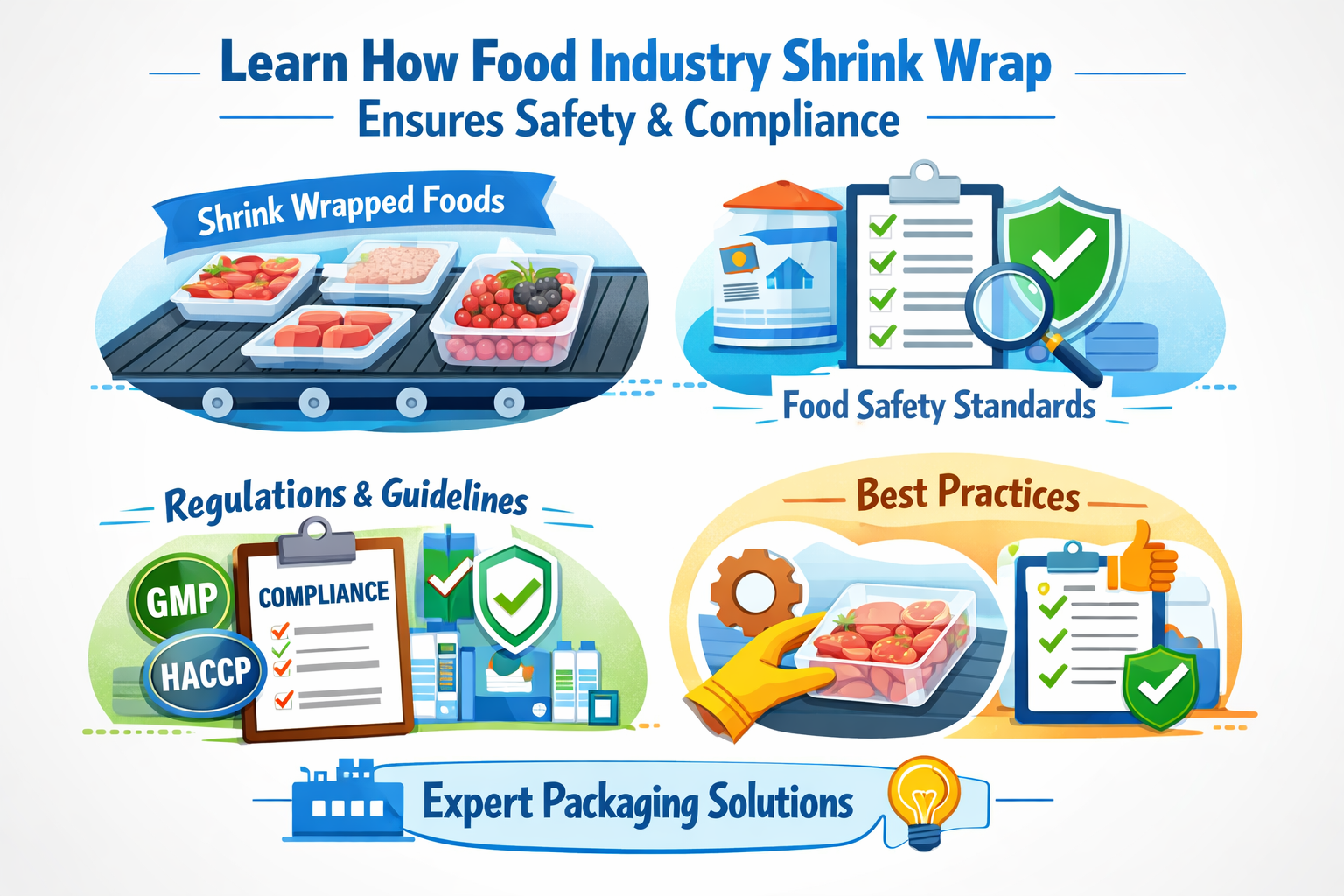
Facilities following HACCP (Hazard Analysis and Critical Control Points) protocols should treat shrink wrapping as a controlled step within their food safety plan.
Navigating shrink wrap regulations can be complex. Regulations vary by country, but key compliance areas include:
Food Contact Compliance
Materials must be:
Labeling Requirements
Shrink wrap used for retail packaging must not:
In many markets, tamper-evident packaging is required. Properly sealed shrink wrap can serve as a tamper-evident solution when applied and validated correctly.
Increasingly, food companies must consider:
Staying informed about evolving food packaging compliance rules is essential to avoid fines, recalls, and reputational damage.
To ensure full compliance and product safety, food manufacturers should implement the following best practices:
Evaluate:
A formal risk assessment helps determine the correct shrink film material and sealing method.
Keep organized records of:
Proper documentation simplifies audits and demonstrates commitment to shrink wrapping safety.
Routine testing should include:
These measures ensure that your food industry shrink wrap process consistently meets safety standards.
Even the best equipment cannot guarantee safety without properly trained personnel. Staff should understand:
Training reduces human error and supports continuous compliance.
Investing in compliant shrink wrapping systems provides more than regulatory protection. It also delivers:
In a competitive food market, compliance is not just about avoiding penalties — it’s a strategic advantage.
Shrink wrapping for the food industry is not a one-size-fits-all solution. Each product, facility, and distribution model presents unique compliance challenges.
Working with experienced professionals ensures:
Our team specializes in helping food manufacturers implement safe, compliant, and efficient shrink wrapping systems tailored to their specific operational needs.
Food safety regulations are constantly evolving, and packaging compliance is too important to leave to chance. Whether you’re upgrading equipment, launching a new product line, or preparing for an audit, expert guidance makes all the difference.
Contact our team today to learn how our shrink wrapping solutions can help your business meet the highest standards of food packaging compliance, adhere to all relevant shrink wrap regulations, and ensure total shrink wrapping safety across your operations.
Let’s protect your products — and your reputation — with compliant, high-performance shrink wrapping solutions designed specifically for the food industry.
 PackTen Packaging
Feb 21, 2026
 PackTen Packaging
Feb 21, 2026